
Croatia is a beautiful country full of many towns, different natural areas and cities to explore (including Dubrovnik as featured in a previous post ). One of the lovely areas that’s conveniently close to Germany and Italy is called Istria. Istria is one of those places that feels like part Mediterranean dream, part hidden treasure. It’s full of culture, beautiful nature, and—best of all—not always expensive. For travellers watching their budget, Istria offers a lot of magic without breaking the bank. Over the years I’ve visited Poreč, Pula, and Rovinj, and each has its own character. Below is a short overview — the highlights, the practical side, and the little things that stuck with me.
- When to go
- Getting around
- Poreč
- Pula
- Rovinj
- Nature and climate
- Things to do
When to go
As with anywhere, it depends on what the main goal of your holiday is as to when is the best season to go. If you can, I would recommend aiming for shoulder seasons—late spring (May) or early autumn (September) are ideal. The weather is often warm and sunny, but eases the burden of high summer crowds and peak prices. In July and August, coastal towns fill up fast, lodgings and campsites book early, and tourist volume can feel overwhelming. In those months, you’ll want to lock in your accommodation well in advance.
Late April and late September are sweet spots in my memory: still pleasant by the sea, fewer day-trippers, and a more relaxed rhythm. That said, if you go in summer, don’t panic—it’s always beautiful, just more bustling.
Getting around
Istria does have a bus network, and you can reach Poreč, Pula, and Rovinj by public transport (especially along the coast), but it’s not always particularly reliable or frequent when you want flexibility. Generally and especially if your trip involves little side detours, hidden coves, or countryside villages, having a car is truly helpful. Whether you drive there or rent one locally, it gives you the freedom to stop when something catches your eye—olive groves, vineyards, quiet bays – and use your time more flexibly and create a reliable plan.
A practical note: in many old towns (especially Rovinj), you can’t drive into the very heart; you’ll park in a lot or on the outskirts and walk in. Also, coastal roads are scenic but sometimes windy, so take your time and enjoy the views.
Poreč
Poreč is a wonderful base for exploring Istria — small enough to be charming yet lively enough to offer plenty of things to do. The old town is a maze of narrow cobbled streets lined with little shops, cafés, and restaurants, and it’s easy to spend an afternoon just wandering and taking in the atmosphere. The seafront promenade is perfect for an evening stroll, and you’ll find a mix of locals and tourists enjoying the sunset views over the Adriatic. One of the main sights is the Euphrasian Basilica, a UNESCO World Heritage site, which is well worth a visit even if you’re not particularly into churches — the mosaics are stunning and the view from the bell tower is lovely.
Poreč also offers plenty of accommodation options, from budget-friendly campsites right by the sea to hotels and lovely holiday homes a bit further inland.
This lovely villa near Poreč is a beautiful and comfortable holiday home set a little inland, making it the perfect mix of peaceful retreat and easy access to the coast. It’s well-equipped with everything you might need — a spacious layout, modern facilities, and a lovely private pool and terrace area that’s great for relaxing after a day at the beach or exploring the towns nearby.
The hosts are extremely friendly and accommodating, always happy to share local tips and recommendations — from good restaurants and vineyards to reliable taxi services, bus routes, and day trip ideas. While having a car is definitely the most convenient way to get around Istria, it’s helpful to ask your hosts about fair taxi prices before heading out, especially for longer journeys or evening rides back from town. Overall, this villa makes a fantastic base for exploring the region — calm, comfortable, and with the kind of personal touch that makes your stay feel truly local.
Pula
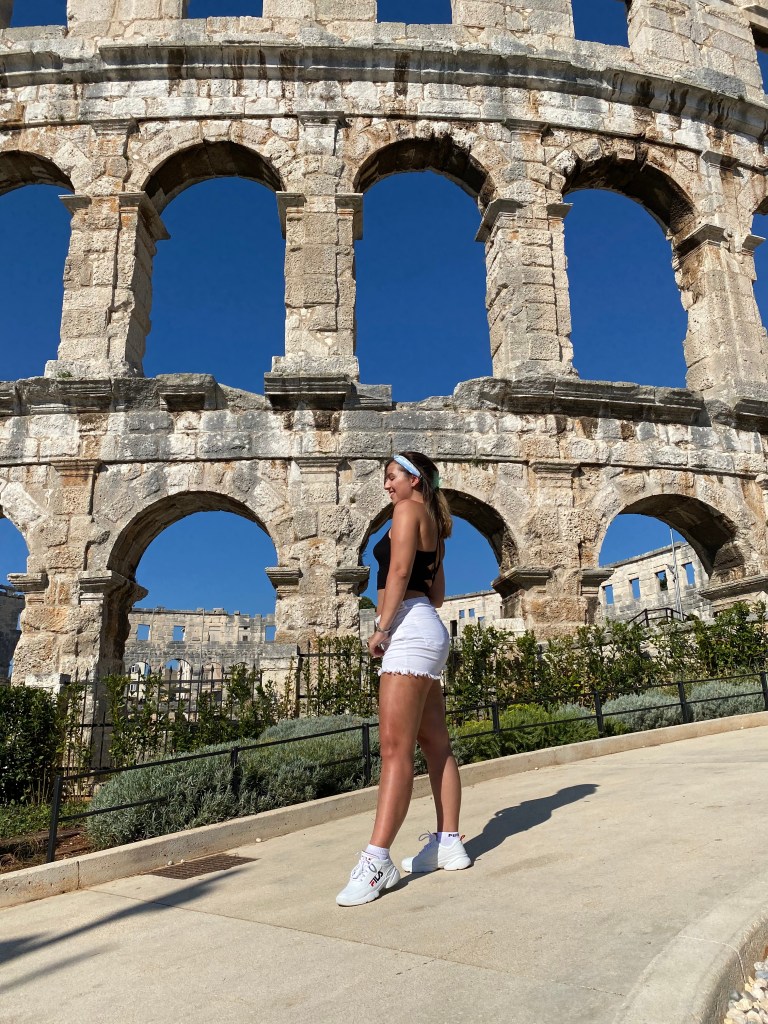
Pula is the largest city in Istria and makes for a great day trip if you’re staying elsewhere along the coast. The main attraction here is, of course, the Pula Arena, an incredibly well-preserved Roman amphitheatre that still feels quite surreal to see in person. Even if you don’t go inside, walking around it and seeing it from the outside is impressive enough — especially at golden hour when the light hits the stone just right.
The rest of the city has a slightly more urban feel compared to towns like Poreč and Rovinj. There are a few nice cafés and shops scattered through the old town, and the market is fun to visit in the morning if you like local produce and people-watching. I personally find that while Pula has some fascinating history and is well worth seeing, the atmosphere is a bit less charming than some of the smaller towns, so a half-day visit is usually enough.
Rovinj
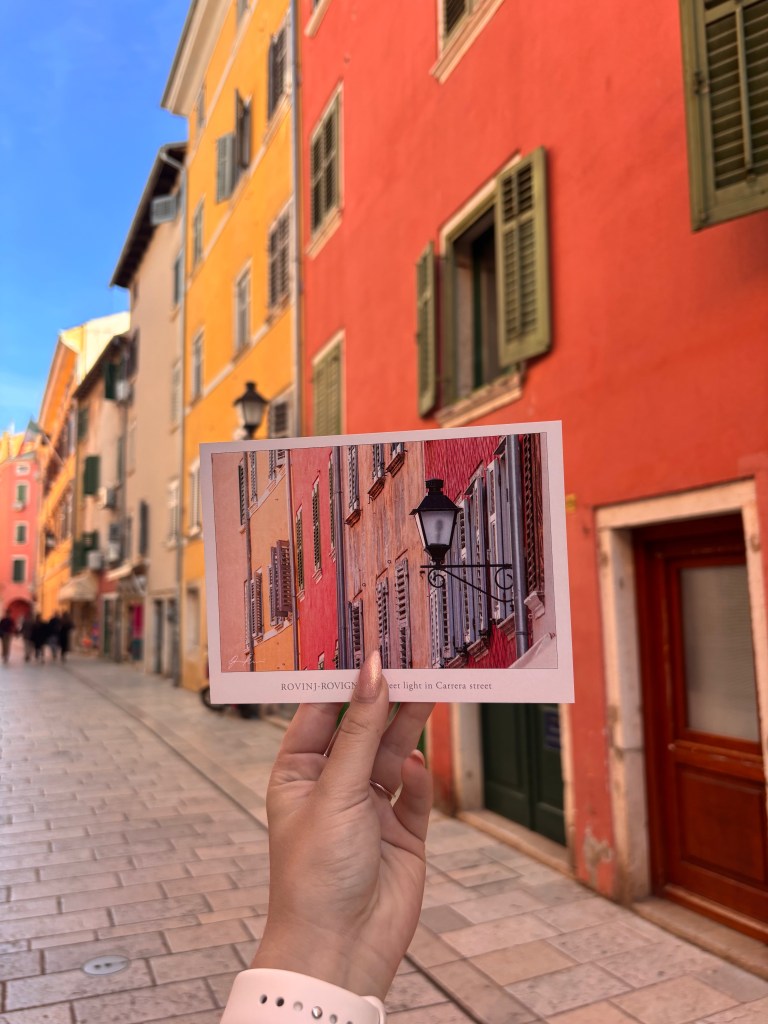
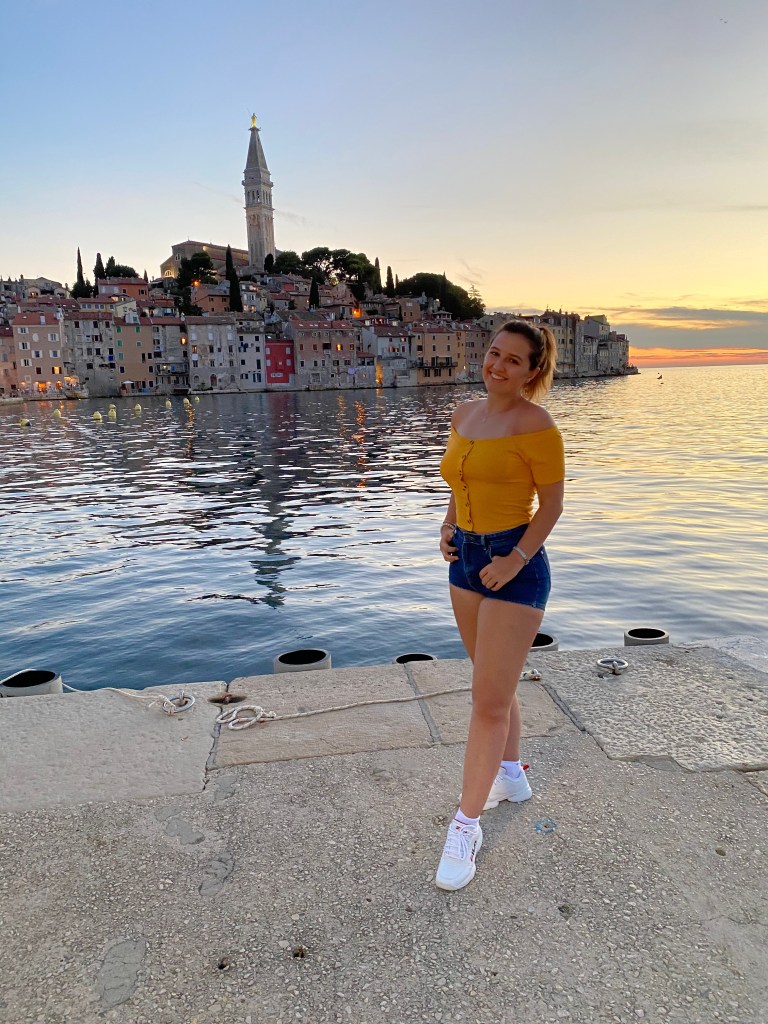
Rovinj is, without a doubt, my favourite town in Istria. It’s one of those places that instantly captures you — a stunning old town set on a small peninsula, full of colourful houses that seem to rise straight out of the water. The narrow alleys twist and turn, leading you up towards the Church of St. Euphemia, from where you get a beautiful panoramic view over the rooftops and the sea. It’s one of those cities that’s just made for wandering — every corner seems more picturesque than the last.
There are countless little galleries, boutiques, and wine bars tucked into the old stone buildings, and the waterfront is lined with great restaurants serving fresh seafood and local wine. We had a few meals there and were never disappointed — everything just tastes better when you’re looking out at the water. Rovinj also comes alive in the evenings, with a lovely relaxed buzz in the air. You can sit by the harbour with a drink and watch the sunset, and it genuinely feels like a scene from a postcard.
Photographers and anyone who enjoys capturing travel memories will absolutely love it here — Rovinj is easily one of the most photogenic places in the area. Whether it’s the pastel façades, the washing hanging across the alleys, or the way the light reflects off the sea, it’s just endlessly beautiful.
nature and climate
Istria is a region that truly has it all — from crystal-clear turquoise waters and rocky coves to rolling hills covered in olive trees and vineyards. The coastline is mostly rocky or pebbly rather than sandy, but the water is so clear that you’ll quickly forget about that. Many beaches have great swimming spots with easy access to the sea via steps or small piers, and the sunsets along the coast are just incredible. Inland, the landscape changes completely — it becomes greener, quieter, and full of little stone villages perched on hilltops surrounded by forests and fields.
The climate in Istria is Mediterranean, which means warm, dry summers and mild winters. The best time to visit is usually from May to September, when the sea is warm enough for swimming and most places are lively but not overly crowded (especially if you go before or after peak summer). The area is also lovely in early autumn when the crowds have left, the sea is still warm, and the olive and wine harvests begin — it’s a beautiful, slightly calmer time to visit.
Things to do
Beyond exploring the towns, Istria offers plenty to do for those who love a mix of relaxation, nature, and a bit of adventure. The coastline is ideal for water sports — you can rent jet skis, kayaks, or paddleboards in most larger beach areas around Poreč and Rovinj, and it’s a great way to see the coast from a different perspective. There are also a couple of great water parks, such as Aquapark Istralandia near Novigrad and Aquacolors just outside Poreč, both of which make for a really fun day, especially if you’re travelling with kids or simply want a break from sightseeing.
For something a bit calmer and truly local, visiting one of the many vineyards in the region is an absolute must. Istria is known for its excellent wines, particularly Malvazija (a fresh, local white) and Teran (a rich red). Many wineries offer tours and tastings surrounded by beautiful scenery — it’s a lovely way to spend a relaxed afternoon. The area around Motovun and Vižinada is especially known for its vineyards, and several spots are easily reachable by car from the coast.
If you enjoy staying active, the region is fantastic for cycling and hiking, especially inland where you’ll find scenic trails through olive groves and vineyards or routes leading up to charming hilltop villages. And if you’re visiting during the right season, don’t miss the chance to go truffle hunting near Motovun — a very local and delicious experience!
For evenings, it’s well worth going out to explore local restaurants and bars, many of which are set in beautiful coastal spots or tucked into old-town lanes. The food scene in Istria is a great mix of Italian and Croatian influences — lots of seafood, pasta, and olive oil-based dishes. If you’re planning a night out or a dinner in another town, it’s a good idea to check taxi prices beforehand or even ask your Airbnb host for an estimate so you know what to expect for the ride home. Taxis aren’t always metered, and prices can vary quite a bit, so getting a quote or arranging a pick-up in advance can save you some surprises later on.
Exploring Istria feels like stepping into one of the most charming corners of the Mediterranean — full of character, colour, and warmth. It’s also only a short boat trip away from the beautiful Venice which you can find out more about here. The region combines historic seaside towns, rolling countryside, and a coastline that invites you to slow down and explore. There’s truly so much to see and do, from wandering through the cobbled streets of Rovinj and Poreč to visiting vineyards, beaches, and small inland villages that feel untouched by time. While Istria isn’t the absolute cheapest destination, it’s far from expensive — offering great value for the quality of food, accommodation, and experiences you get. It’s one of those places that effortlessly mixes relaxation and adventure, where every day brings something beautiful to discover.
If you’re interested in some Top 10’s, travel and packing tips or more information on different destinations, then check out some of my other Meg’s Places articles and stay tuned for more! In case your questions aren’t answered here, or you have any comments or personal experiences you’d like to share, don’t be afraid to get in touch, comment and let me know.
You can also follow me @megsplaces on Instagram and Facebook to follow my travels and get regular updates, pictures, story polls and video clips!
 Meg's Places