
Ask anyone what the best time to visit Munich is, and you might get five different answers. Munich is one of those cities that somehow manages to feel both exciting and relaxed at the same time. It’s beautiful without trying too hard, lively without feeling overwhelming and full of traditions while still being incredibly modern and international.
As someone who lives here, I’ve really come to appreciate how much the city changes throughout the year. Every season brings a completely different atmosphere, different traditions and different ways of enjoying the city.
One of the biggest advantages of Munich is also its location. Not only does the city itself have so much to offer, but you’re also incredibly close to mountains, lakes, castles and charming little towns that make for amazing day trips. I’ll definitely be going into those in more detail in future posts, but for now, let’s focus on Munich itself and the five seasons that make this city so special — yes, five, as Oktoberfest is its own season and one of my personal favourites 😉
Before we get started, something I would generally advise against is visiting in late October or early November. It’s usually too late for warm weather and beer garden season, Oktoberfest is over, and it’s still a little too early for the cosy Christmas atmosphere as most Christmas markets only open towards the end of November around the first Advent. The city can feel a bit grey and wet during that short transition period. Other than that though, there’s honestly something lovely about Munich all year round.
Here’s a closer look at why:
spring
Spring in Munich is one of those times of year where the whole city suddenly feels alive again. After the colder winter months, the first sunny days completely transform the atmosphere. The parks, the Isar riverbanks and every outdoor café immediately fill up with people enjoying the sunshine and an Aperol or Sarti Spritz — even if it’s only 15 degrees outside. The weather at this time of year can be very unpredictable though. One week it can snow, the next it can suddenly be 25°C and feel like summer. Layering is definitely essential. But even with the unpredictability, spring is such a lovely time to visit because everything starts feeling brighter again. Trees begin blooming, flowers appear throughout the city and the outdoor terraces suddenly become full of life.
One thing that has become especially popular in recent years is the use of so-called Schanigärten — outdoor seating areas set up along the streets and parking spaces that really grew in popularity during and after Covid. On warm spring evenings, these terraces create such a lively atmosphere throughout the city. Spring is also the beginning of the beer garden season, which is a huge part of Munich culture. Sitting under chestnut trees with a pretzel and a drink in one of the city’s many beer gardens is something you absolutely have to experience at least once.
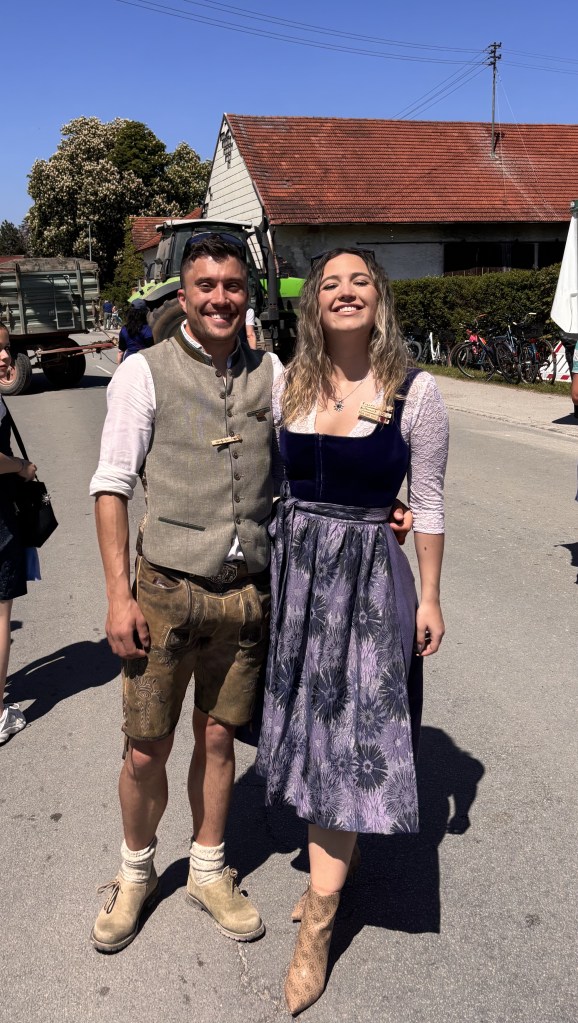
Around this time, many surrounding Bavarian villages also begin their Stüberl season. These are little huts or temporary gathering spots set up around the village maypole before the new maypole is raised on the 1st of May. It’s a very local and traditional atmosphere that really brings communities together. Another big event during spring is the Frühlingsfest — often called the “little Oktoberfest.” It takes place on the Theresienwiese, the same grounds as Oktoberfest, and offers a similar atmosphere but on a smaller scale. It can still get crowded and expensive, especially on sunny weekends, but the beer gardens and overall atmosphere are really lovely on a good day. Personally, I wouldn’t describe this as a must-see of the season but it’s a nice way to spend the day in a beer garden, get dressed up or have a wander around if the weather’s good.
Meg’s Spring Favourite: My personal highlight in spring has to be the Stüberl vibes if there is one in my local village and if not, then the outdoor drinks and nibbles.
summer
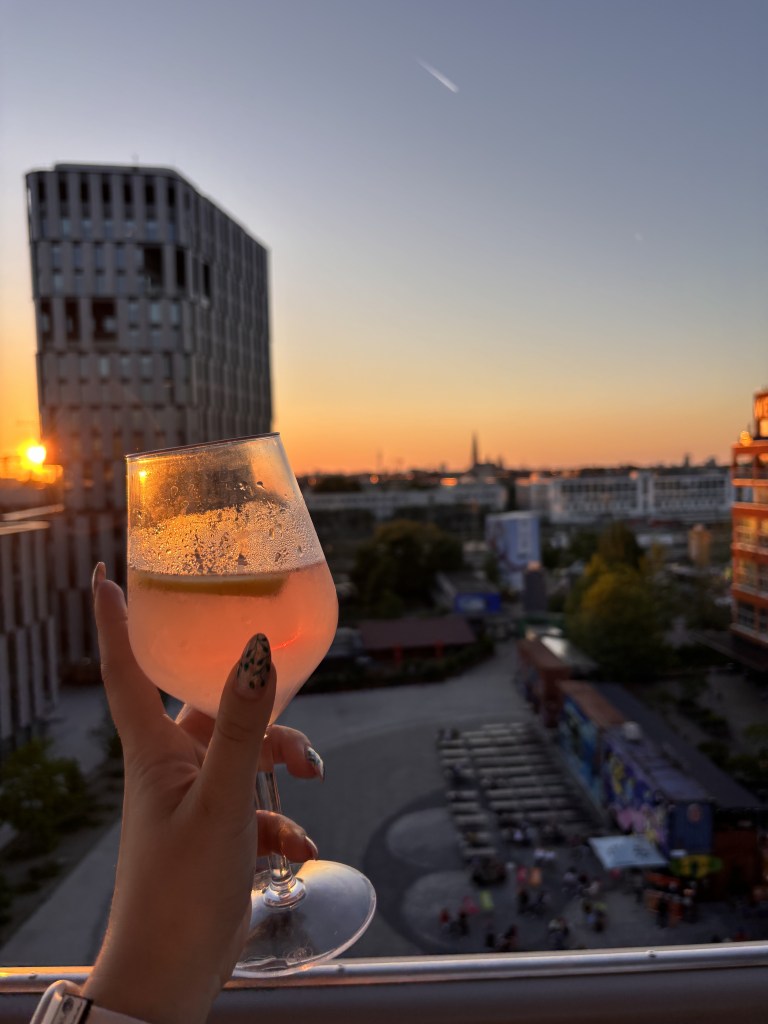
Summer in Munich is honestly hard to beat. The entire city moves outdoors — beer gardens are packed, cafés and restaurants spill out onto the streets even more and people spend as much time outside as possible. There’s such a social atmosphere everywhere you go, especially during the long warm evenings.
The Isar river and the English Garden become some of the city’s biggest gathering spots during summer. People barbecue, swim, picnic, play music and simply enjoy being outside. Swimming in the Isar can be really refreshing on hot days, but it’s important to be careful as the current can be surprisingly strong in certain areas. If you’re unsure about your swimming spot, feel free to ask the locals near you. They’ll be more than happy to point you towards a good alternative or some tips and tricks on the best places to enter and exit.
One of Munich’s most famous sights during summer are the Eisbach surfers in the English Garden. Watching people surf on a standing river wave right in the middle of the city is certainly unique and very impressive. However, it’s also worth noting that there have recently been increased discussions and concerns surrounding safety there, as the Eisbach can be dangerous and accidents have occurred. So while it’s definitely worth watching, it’s important to respect the risks involved. Also, work is regularly carried out in the area which sometimes impairs the quality of the wave – so don’t be too disappointed if you happen to go on a slow or bad day.
The Olympic Park and Westpark are especially beautiful during the summer months and often host open-air events, concerts and cinema evenings. The Tollwood Festival is another major summer highlight for the city with concerts, food stalls, markets and cultural events. It can be quite expensive, but the atmosphere is really special and definitely worth experiencing at least once. Munich is also a fantastic base for summer day trips — lakes, mountains and castles are all within easy reach. I’ll definitely be writing a separate post on the best day trips from Munich because there are simply too many good ones to squeeze into this one. xpensive, but the atmosphere is really special and definitely worth experiencing at least once. A great day at the end June is also the Christopher Street Day (CSD) parade. This is usually the last weekend in June and is always very hot but a fantastic day out with lots to see and just a great vibe to enjoy.
Summer is also peak tourist season, so naturally the city gets busier, especially during school holidays. But honestly, Munich handles crowds quite well and the atmosphere during summer evenings makes up for it completely. Sitting outside in a beer garden or walking through the city on a warm evening is one of my favourite things about Munich.
Meg’s Summer Favourite: This one is easy – a trip to the mountains with a lovely hike followed by good food and drinks outside either by a lake, in the mountains, in the city or anywhere nearby – With the CSD as a close second.
autumn
Autumn in Munich feels calmer but still incredibly beautiful. The temperatures become milder, the leaves change colour and the city takes on a really homey atmosphere. It’s also one of the best times for little trips into nature — whether that’s hiking in the mountains, visiting lakes or simply exploring the forests and smaller towns around Bavaria.
Beer gardens also become a little quieter again after the busy summer season, but honestly, this can make them even nicer. There’s something really lovely about sitting outside wrapped in a jacket with autumn colours all around you. The hiking season during autumn is fantastic. The air is often crisp and clear, the mountain views can be absolutely stunning and temperatures are usually much more comfortable for longer walks than in the middle of summer. For travellers who enjoy nature, autumn is honestly one of the best times to visit Munich and Bavaria.
Meg’s Autumn Favourite: The season within the season – the Oktoberfest!
The Fifth Season — Oktoberfest
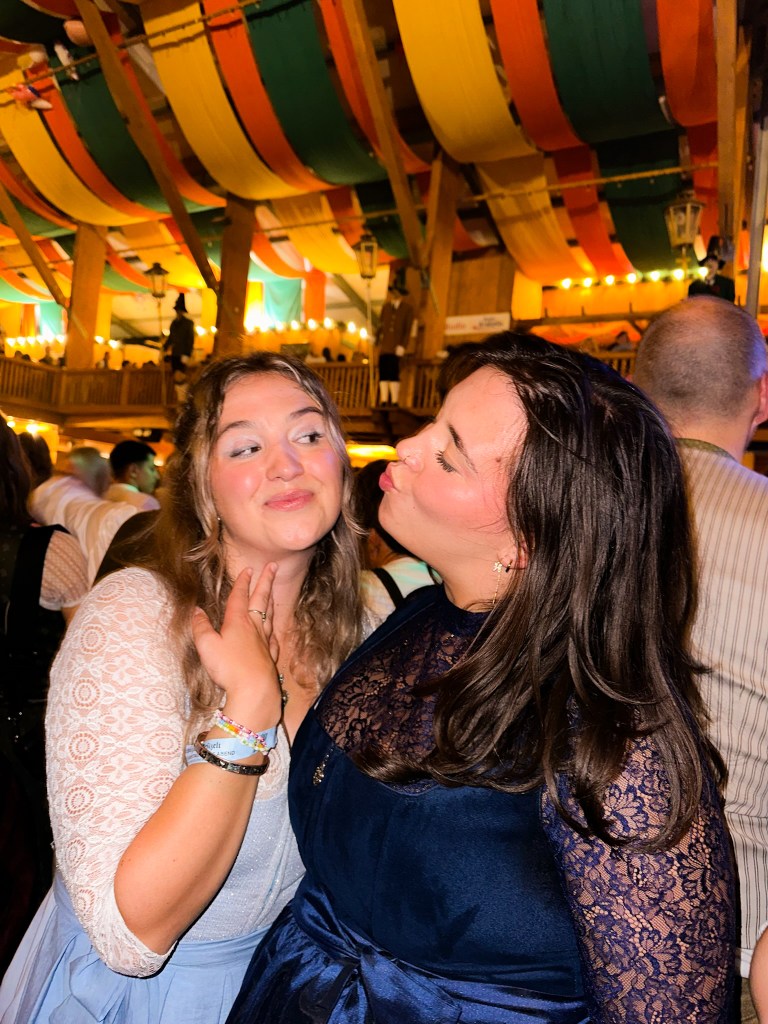
In Munich, Oktoberfest is often referred to as the “fifth season” — and once you experience the city during that time, you quickly understand why. For just over two weeks, the entire atmosphere of Munich changes. The city becomes incredibly lively, crowded and international as millions of visitors come to experience the world’s largest beer festival.
Oktoberfest is about much more than just beer though. It’s deeply connected to Bavarian traditions, music, food and social culture. One huge part of this is Tracht — traditional Bavarian clothing. For women, this usually means a Dirndl, and for men, Lederhosen. What’s important, though, is that for many locals, Tracht is not simply a costume but a big part of Bavarian culture and tradition. Personally, I would advise against the very cheap “costume-style” versions if possible, as they often look quite inauthentic and I feel they are a bit disrespectful. If you know someone locally, you can often borrow the real thing but honestly, there is no fixed dress code, so don’t feel pressured to dress up.
If you’re planning on visiting Oktoberfest, reservations in the big tents usually need to be organised very far in advance, especially for weekends and evenings. Weekdays during the day are generally a bit calmer and much easier to manage. The city during Oktoberfest is extremely busy and accommodation prices rise significantly, but despite the crowds, the atmosphere can still be absolutely amazing if you plan things properly. I’ll definitely be doing a much more detailed Oktoberfest guide in the future because there are so many helpful tips and things worth knowing beforehand.
Meg’s Oktoberfest Favourite: A good day out with family and friends followed by an evening in my favourite tent and some rides.
Winter
Winter in Munich can be very cold, dark and sometimes icy — but also incredibly cosy and even magical. Especially once the Christmas market season begins towards the end of November around or just before the first Advent (the four Sundays leading up to Christmas are known as the Sundays of Advent), the whole city transforms. Personally, this is one of my absolute favourite times of year in Munich. It’s incredibly welcoming and interesting at the same time.
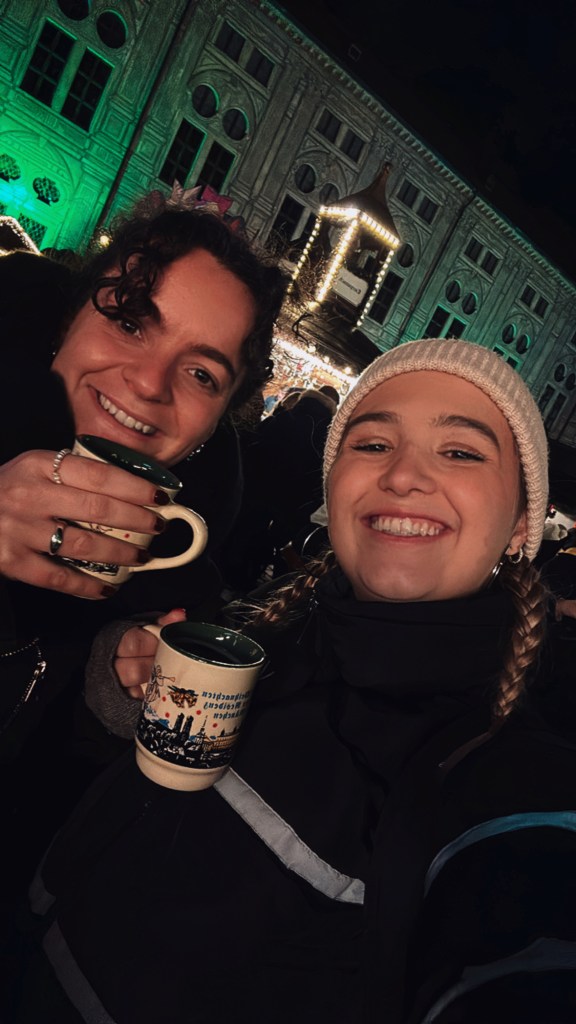
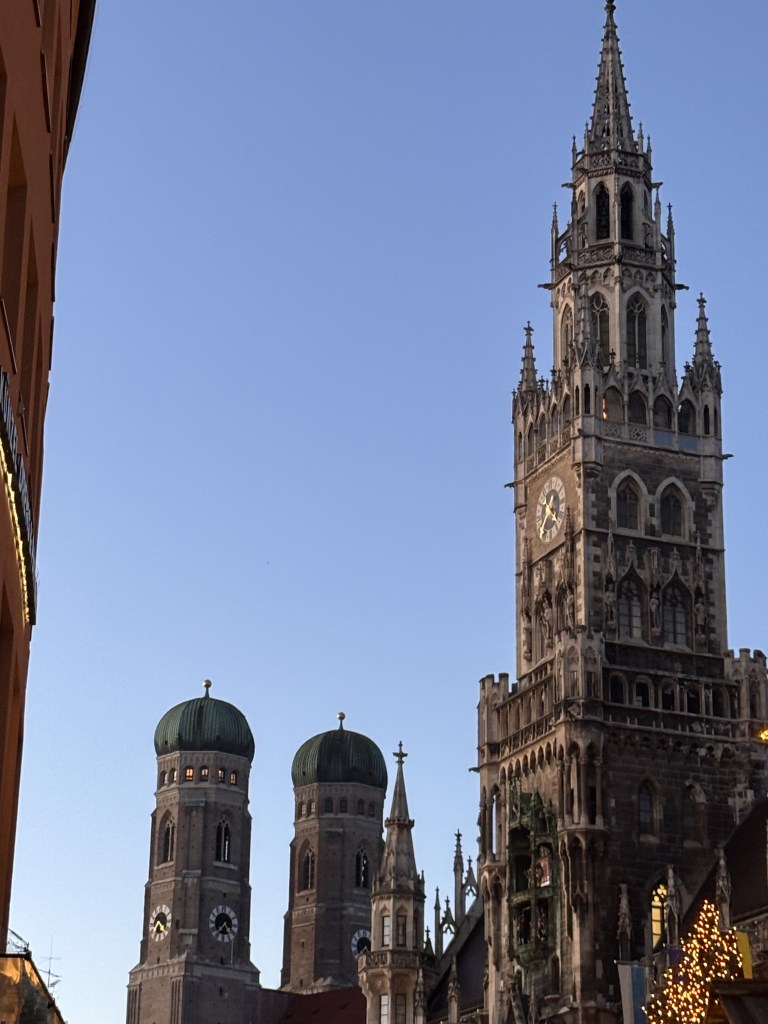
There are Christmas markets all over the city, each with a slightly different atmosphere. The large ones around Marienplatz and Rindermarkt are beautiful to walk through but can feel very touristy and expensive. Smaller markets, like the one in the Residenz or at Weißenburger Platz, often feel much more intimate and relaxed. Don’t get me wrong, they’re still pretty full but it’s a bit different. One of the best parts of Munich winter is definitely the Glühwein culture. Standing outside with a warm mulled wine (or alcohol free alternative of course) while lights twinkle around the city somehow makes the cold weather feel completely worth it. When snow falls on the old buildings and Christmas lights, Munich genuinely feels magical.
Winter also brings plenty of ice skating options throughout the city, although these can sometimes be a little pricey. January tends to feel a bit quieter and greyer once the Christmas season ends, but it’s also the perfect museum and café season. Munich has so many fantastic museums that are ideal for colder days. Towards the end of February, the Starkbierfest season begins — another very Bavarian tradition involving stronger beers, lively beer halls and the unofficial start of the next Tracht season.
Meg’s Winter Favourite: A Glühwein with good company in the Residenz.
Munich is a city that truly changes throughout the year, and that’s one of the reasons I enjoy living here so much. Every season has its own traditions, atmosphere and special moments, whether that’s warm summer evenings in beer gardens, snowy Christmas markets or the excitement of the Oktoberfest. There’s also so much more to Munich and Bavaria than I could fit into one article — from day trips and local cafés to museums, lakes, mountains and local traditions. So if you’re interested in more Munich and Bavaria content, stay tuned because there’s definitely a lot more to come.
If you’re interested in more Top 10s, travel and packing tips or more information on different destinations, then check out some of my other Meg’s Places articles and stay tuned for more! IIn case your questions aren’t answered here, or you have any comments or personal experiences you’d like to share, don’t be afraid to get in touch, leave a comment or let me know. If you’re interested in Google Maps lists, feel free to message me on Instagram.
You can also follow me @megsplaces on Instagram and Facebook to follow my travels and get regular updates, pictures, story polls and video clips!

